

Fire Extinguisher Safety in New Zealand: What to Check Before You Need One
A fire extinguisher can help stop a small fire from becoming something much more serious, but only it is in date, easy to find and ready to use. Take a few minutes to check yours before you need it. Is it visible? Is it easy to access? Has it been tested and tagged recently? Does everyone know where it is and how to use it? An extinguisher should support your fire safety plan. It does not replace working smoke alarms, a clear escape route or calling 111.
Where should a fire extinguisher be kept?
Fire extinguishers should be:
– Easy to see and reach
– Clearly identified with suitable signage
– Mounted or stored where they cannot be blocked by boxes, stock or furniture
– Positioned near likely fire risks, but not so close that someone would need to walk through a fire to reach them
– Included in workplace inductions and emergency procedures
Do not hide an extinguisher in a cupboard or behind equipment where people may not find it quickly. In an emergency, every second matters. Make sure everyone in your workplace or household knows where to find it. An extinguisher cannot help if people cannot reach it quickly.
How do you know if a fire extinguisher is ready to use?
Check the service tag for the date of the last test and tag. Where this applies to your site, make sure a qualified provider has tested and tagged the extinguisher within the last 12 months. Extinguishers need regular inspection, servicing and maintenance to remain reliable. Follow the manufacturer’s instructions and the requirements that apply to your site. If you are unsure when yours was last tested and tagged, check the service tag or arrange an inspection with HSM or another qualified fire protection provider.
How do you use a fire extinguisher?
Fire and Emergency New Zealand recommends the PTASS method:
1. Pull the safety pin or remove the clip.
2. Test the extinguisher with a short test burst.
3. Aim the nozzle at the base of the fire.
4. Squeeze the handle slowly and evenly.
5. Sweep from side to side across the base of the fire.
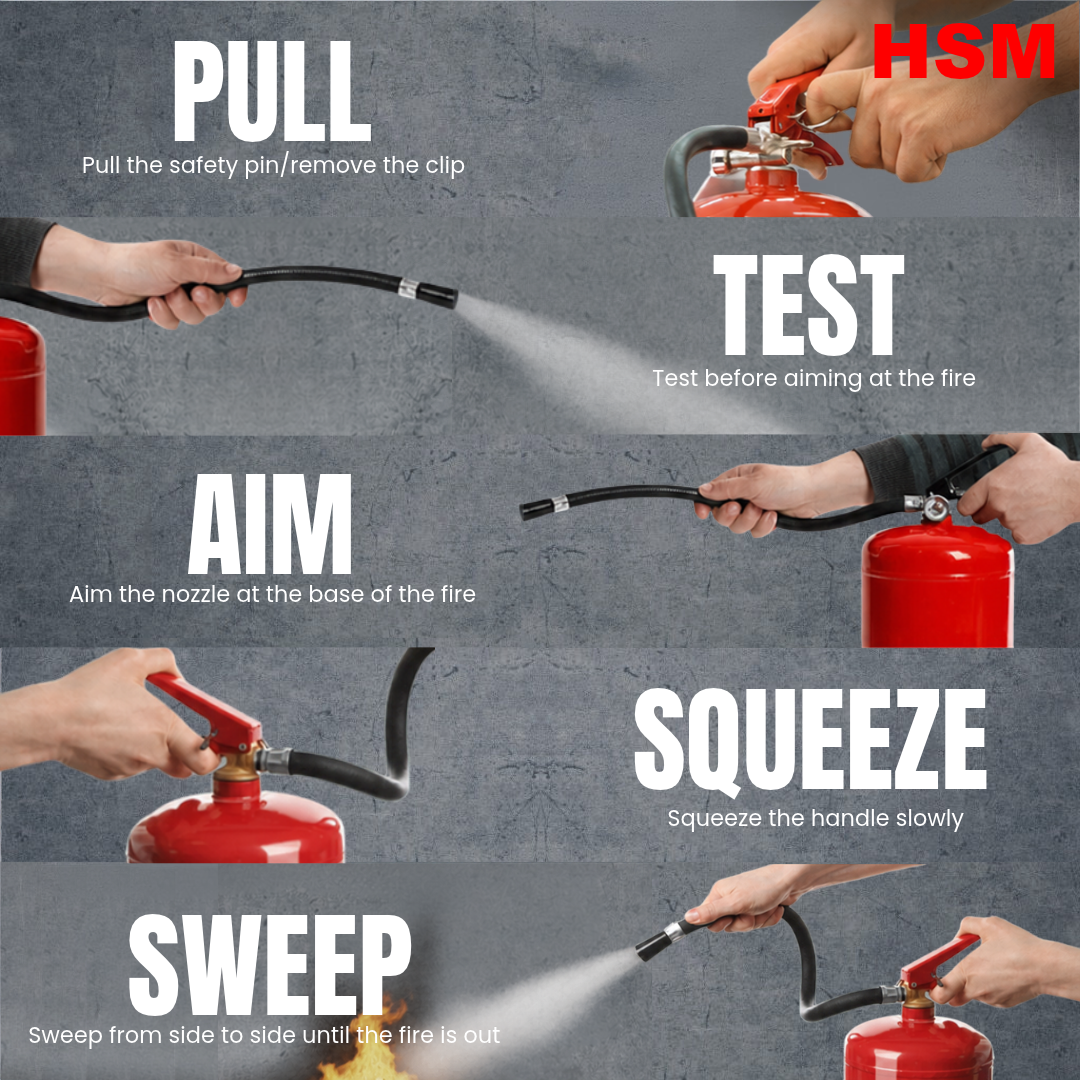
Most extinguishers discharge for only a short time, so aim carefully and do not waste the contents. They are usually designed for use from about two to three metres away. Use an extinguisher only when the fire is small and contained.
Make sure everyone has evacuated or is leaving, call 111 and keep a clear escape route behind you. Only continue if you feel confident it is safe. A suitable fire is no larger than a wastepaper basket or a pot on a stove.
Leave immediately if flames are spreading, smoke is heavy or the fire blocks your exit. Never put yourself or anyone else at risk.
Electrical fire safety: simple ways to reduce the risk
Fire and Emergency New Zealand recommends checking electrical equipment, chargers, batteries and multi-boards regularly. To reduce the risk:
– Avoid overloading multi-boards or plugging one multi-board into another.
– Check that electrical cords and chargers are not frayed, damaged or modified.
– Keep cords away from carpets, mats and bedding.
– Never leave cords tightly coiled while they are in use.
– Charge devices on a hard, flat surface rather than on a bed, couch or pillow.
– Use the correct charger and battery for each device.
– Never use lithium-ion batteries or devices that have been damaged or dropped.
– Keep electrical appliances away from water.
– Give heaters, fans and other appliances plenty of airflow.
– Switch appliances off when they are not being used.
Keep e-bikes and e-scooters away from exits when charging. If possible, charge and store them outside or in a garage, shed or carport away from living areas. If an appliance or lithium-ion battery starts smoking or burning, leave immediately and call 111 from outside. Never go back inside to retrieve it.
Fireworks and fire safety this Guy Fawkes
With Guy Fawkes taking place tonight, Thursday 5 November 2026, fireworks safety is especially important. Fire and Emergency New Zealand reported seven suspected fireworks-related incidents on Monday 2 and Tuesday 3 November, including vegetation fires and a vehicle fire. Their reminder is simple: low risk does not mean no risk. If you are lighting fireworks, check local conditions and restrictions through the Fire and Emergency New Zealand Check its Alright website and check with your local council before using fireworks in a public place. Do not light fireworks in windy conditions and keep a large bucket of water or a hose nearby. Make sure fireworks are pointed into the sky and away from buildings, trees, dry grass and other flammable materials. Let your neighbours know, particularly if they have pets or livestock, and soak used fireworks in water before disposing of them. If fireworks start a fire, move away, warn others and call 111. Do not attempt to manage a spreading fire yourself.
A simple fire safety check
Take a few minutes to ask:
– Can everyone find our fire extinguisher?
– Is it suitable for the risks in this area?
– Is it visible and easy to access?
– Is the service tag current?
– Is the extinguisher free from damage or obstruction?
– Do we know where the nearest exit is?
– Are our smoke alarms working?
– Are our electrical cords, chargers and multi-boards in good condition?
– Do we know what to do if a fire starts?
Being prepared does not mean expecting something to go wrong. It means making sure that, if something does happen, people know what to do and the equipment is ready to help. If you are unsure whether your fire extinguishers are suitable, accessible or up to date with testing and tagging, HSM can help you review what is currently in place and identify any gaps.